Sliding Gates in Round Rock, TX

Plain notes on sliding gate footings, tracks, operators and finishes for driveways in Round Rock, TX, written from the crew's side of the work.
What We Cover
- Cantilever or V-Track Sliding Gate in Round Rock How a cantilever sliding gate differs from a V-track gate for Round Rock driveways with uneven ground.
- Choosing a Sliding Gate Installer in Round Rock What to look for in a sliding gate installer when your Round Rock lot has a slope, an HOA or a long drive.
- Sliding Gate Operator Sizing in Round Rock What decides the motor size for a steel sliding gate, from leaf weight to Texas heat and daily cycles.
- Sliding Gate Safety Sensors and Photo Eyes in Round Rock Where photo eyes, edge sensors and stops belong on a sliding gate beside a busy Round Rock street.
- Sliding Gate Track Foundations in Round Rock Clay Soil How expansive clay soil in Round Rock affects the footing and track of a sliding driveway gate.
- Steel Sliding Gate Fabrication for Round Rock Homes How a steel sliding gate frame is cut, welded, primed and coated before it reaches a Round Rock driveway.
Sliding Gates in Round Rock, TX
A sliding gate suits a Round Rock driveway when the opening is wide, the apron is short, or the lot slopes toward the street. The gate runs sideways along the fence line instead of swinging across the pavement, so it never needs clearance in front of the posts and never rubs on a rising grade. That is the main reason crews around Williamson County reach for a slide gate before a swing gate on tight, sloped or busy driveways.
How the work starts on a Round Rock lot
The job starts with the ground. Most properties in Round Rock sit on expansive clay soil, which swells in wet months and shrinks in the dry heat, so the track footing is dug deeper than a fence post and tied together with rebar as one grade beam. Utility locates come next, then the conduit route for the operator, then the beam.
Steel, frames and finishes
Frames are cut from steel tubing, squared on a table, welded and ground, then galvanized or given a powder coat so the sprinklers and summer sun do not eat through the finish. Aluminum is used where a lighter leaf is needed, and wrought iron scrollwork is added as infill when the design calls for it. Picket spacing is set tight enough to keep children and pets inside the yard.
Cantilever or V-track
A cantilever gate hangs from roller carriages and clears the ground completely, which helps near Brushy Creek style drainage swales where debris collects. A V-track gate rides in a groove and works well on a flat, clean opening. The choice follows the slope, the debris and the room available beside the opening, and the operator is sized after the style is picked.
Guides
The pages here cover track footings in clay, the two roller styles, operator sizing for summer heat, fabrication steps, safety sensors and how to judge an installer. Each one answers a single question a Round Rock homeowner asks before a gate goes in.
Latest Guides
Why a Driveway Gate Stops Working and What to Check First in Round Rock
2026-11-08
What is the first thing to check when a gate will not move?
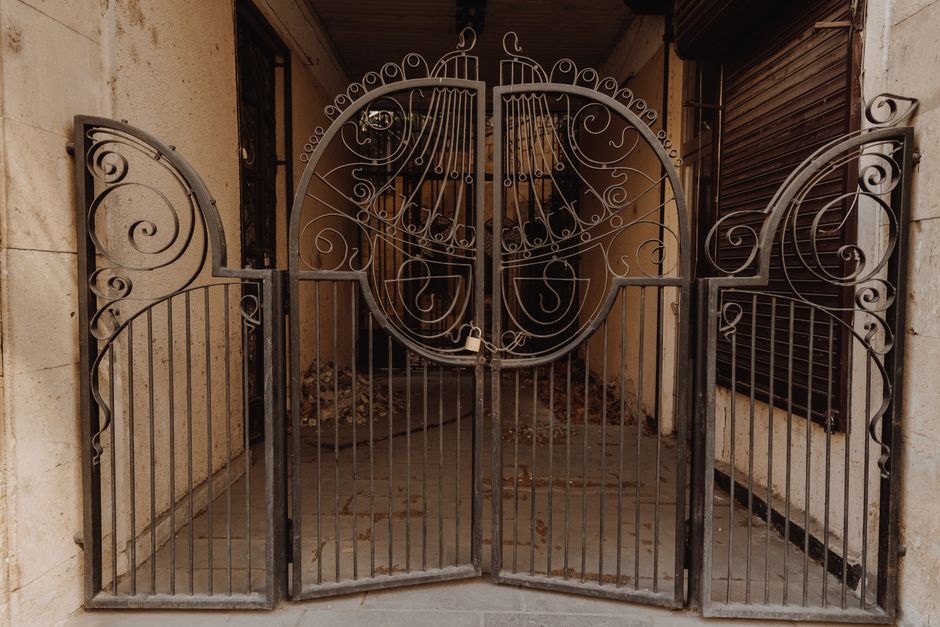
The first thing to check is the power, because a dead gate is most often a dead supply. Look at the operator for a status light, check the breaker for the circuit, and reset the outlet if one feeds the unit. A tripped breaker after a storm or a lawn crew's trimmer cut is far more common than a failed motor, and the check takes two minutes.
If the operator is solar, look at the panel for shade, dirt or a covering of leaves, and note whether the battery has had a run of cloudy days. A battery drawn down by weeks of overcast and short daylight can leave the gate sluggish before it quits entirely.
Does the gate move by hand?

A gate that moves freely by hand points the problem at the operator, while one that sticks points at the track, hinges or posts. Release the operator with its manual key, then push the leaf the whole way open and closed. Note any spot where it drags, scrapes or jumps.
On a slide gate, a heavy spot usually means a rolling carriage with a worn bearing, debris in a groove or a rail that has moved out of line. On a swing gate, a drag at the same spot each swing is usually a sagging leaf or a hinge post that has leaned. Hand testing sorts the cause in half the time of any other step.
Why does a gate bind in summer and run fine in spring?
A gate binds in summer because expansive clay soil dries and shrinks, and the posts and track footings move with it. Round Rock sits on clay that swells after wet months and drops in the heat, and a footing that was level in April can be out of line by August.
The symptoms are consistent: a leaf that rubs one post, a slide gate that jumps at the same point on the track, a latch that no longer lines up with its keeper. Sighting along the rail with a string line shows the shift. Shimming the carriage or track plate often cures an early case, and a footing that keeps moving may need more serious work later.
Could heat be the problem?
Heat is a real cause in Texas. An operator box in direct afternoon sun runs far above air temperature, and many motors protect themselves with a thermal cutout that stops the gate partway through the travel. The gate then works again after an hour of shade.
If a gate quits only on hot afternoons, suspect the motor load. Dirty rollers, a rail with a slight bend or a leaf that has gained weight from a heavy coating all add to the load. Cleaning and lubricating, then shading the operator, often brings the motor back inside its limit. A hotter box also shortens battery life on solar units, so check that too.
What do the limit switches and sensors do?
Limit switches and sensors stop a gate that otherwise looks fine. A photo eye knocked out of aim by a leaning post, a spider web across a lens, or a sprinkler spray on a reflector will tell the operator an obstruction is present and the gate will refuse to close. The remedy is cleaning the lenses and re-aiming the pair.
A limit switch that has drifted can make the gate stop short or run into the stop. Watch the travel and note whether the gate stops at the same place each time. If it stops short of closed, the closed limit has moved. If it grinds against the stop, the limit has not caught. Resetting the limits is part of normal service and takes a few minutes with the controller.
Is it the remote or the keypad?
A remote that fails while the gate works from the keypad or the wall button is a remote problem, usually a battery, and a gate that ignores every input but runs from the manual test is a control board problem. Try each input in turn before assuming anything bigger.
Radio interference sometimes shortens range, especially near a busy area such as Round Rock Premium Outlets, where many devices share the same band. Moving the receiver antenna higher or farther from metal often restores range without any other change.
What do strange noises mean?
A grinding noise from a chain drive usually means a dry or stretched chain, and a clicking noise from a rack and pinion drive usually means a worn tooth or a rack that has shifted from the pinion. A rumbling noise on a slide gate is a bad roller. A squeal on a swing gate is a dry hinge. Each sound narrows the search.
Record a short video of the gate in motion. A clip played back at a slow speed shows a jump, a twist or a stall that the eye misses, and it helps whoever services the gate to find the fault without a long trial and error visit.
When is the leaf itself the issue?
The leaf is the issue when the frame has racked or sagged. A steel frame that was welded square can still drift out of square if a hinge post moves, or if the leaf was never braced enough for its width. Measure the diagonals, and if they differ by more than a small amount, the frame has moved.
A sagging leaf on a swing gate often shows as a gap at the top of the latch side and a scrape at the bottom. A turnbuckle brace or an adjustment at the hinge may bring it back, though a badly racked frame needs to be squared on a table and rewelded. Painting over a sag only hides it.
How much of this can be prevented?
Much of it can be prevented with a short seasonal routine. Wipe the lenses, clear the track, grease the carriages and hinges, check the fasteners, test the safety reversal and confirm that sprinklers do not hit the rail or the sensors. The routine takes about twenty minutes and catches most of the faults described here before they stop the gate.
Powder coat and galvanizing slow rust, but scratches and weld seams still need touch up. Walk the frame once a year and treat any bare spot with a rust inhibiting primer and matching coat. Rust that starts at a weld spreads under the finish and weakens the joint over time.
When is the problem bigger than a quick fix?
The problem is bigger when a footing keeps moving, when a post leans or when a beam has cracked. Those faults come from the ground, not the gate, and no adjustment to the operator will hold. A fabricator or a concrete crew has to reset the footing, with proper depth and drainage, before the hardware can stay aligned.
A gate that has been fixed three times for the same fault is telling the same story each time. Look at the water, the soil and the footing depth before replacing another motor, because the ground is usually the cause when the same symptom keeps coming back after every repair.
What order should the checks follow?
The order is power, manual movement, track and hinges, heat, sensors, limits, inputs, noises and finally the frame. That sequence moves from the cheapest and quickest test to the slowest, and it keeps the search from jumping to a motor swap when a sprinkler soaked the photo eye. Written on a card inside the operator cover, it stays with the gate for the next time.

Measuring a Driveway Opening for a Sliding Gate in Round Rock
2026-11-08
Why does the opening measurement decide the whole gate?

The opening decides the gate because every other number follows from it: the frame length, the tail or run beside the opening, the footing, the operator and the post spacing. A sliding gate needs about the width of the opening again as free fence line, and a cantilever needs closer to one and a half times. A measurement taken carelessly in Round Rock, TX, shows up later as a gate that will not clear a mailbox, a tree or a retaining wall.
Measuring takes a long tape, a string line, a level, a notepad and a half hour of walking the property. Nothing about it requires special tools, but it does require patience, because the numbers are taken in more than one place and compared.
How wide is the opening, really?
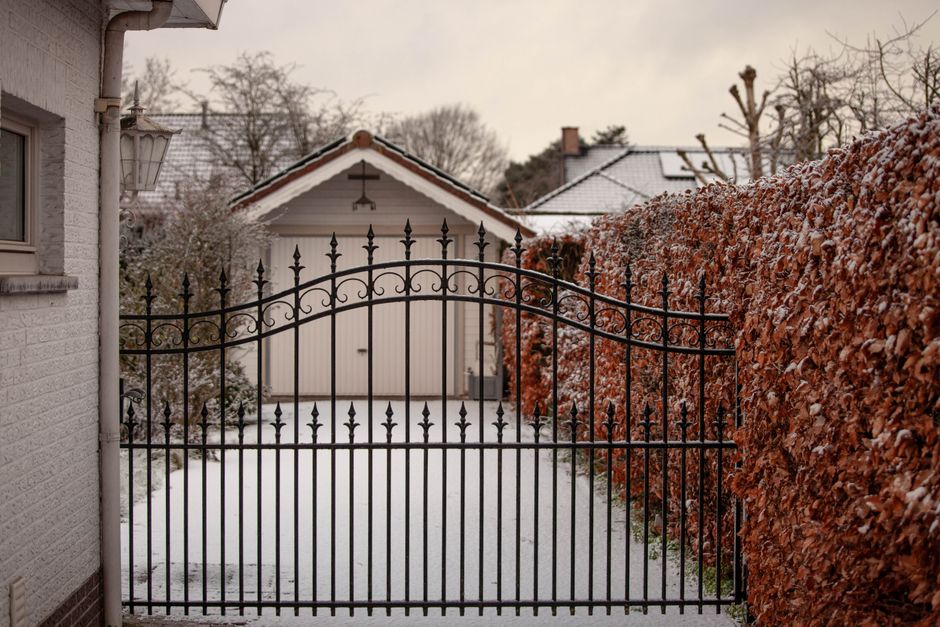
The opening is measured at three heights, not one, because posts and walls are rarely plumb. Take the width at ground level, at waist height and at the height the gate top will sit. The smallest of the three is the clear opening, and the largest tells the fabricator how much trimming the posts may need.
Write down the width between the face of one post and the face of the other, not centre to centre. Add the post size to each side only when the posts are not yet set. A driveway used by a pickup with mirrors, a trailer or a delivery truck needs a wider clear opening than a car, so note the widest vehicle that will pass and leave a hand width on each side of it.
How much room is there beside the opening?
The room beside the opening is the run, and it sets the style. Stretch the tape along the fence line from the edge of the opening and mark where it hits a tree, a meter, a downspout, a corner or a change in grade. If the clear run is shorter than the opening, a slide gate will not fit and a swing gate or a bi-parting layout is the answer.
Check the ground along the run too. Lots near Brushy Creek and Old Settlers Park often have gentle falls toward drainage swales, and the run may drop several inches over its length. A gate on a falling track wants to roll open or shut on its own, so the slope has to be known before the operator is chosen, and a stop or a heavier motor may follow.
What does the slope do to the layout?
Slope changes the choice between a track and a cantilever. A track beam can be poured level in a stepped line, but the steps complicate the roller path. A cantilever carriage ignores the grade between posts, so a driveway that falls toward the street usually leans toward the cantilever style.
Run a string line from the top of one post to the other and drop a level on it. Then measure down from the string to the pavement at each end and at the middle. Those three heights show the grade across the opening, and they tell the fabricator whether the bottom rail needs to follow the ground or clear the high point.
Where do the posts and the footings go?
The posts go where the soil is firm, the utilities are clear and the gate can park fully open without blocking a walkway. Texas requires a locate call before any digging, and the gas, water and electric lines that serve a Round Rock house often run right along the driveway edge, which is exactly where footings are wanted.
Expansive clay soil is the other limit. Footings sit below the layer that swells and shrinks, tie into a continuous beam on a slide gate, and keep water away from the line. Mark every sprinkler head, valve box and downspout outlet within a few feet of the planned beam, because a wet footing moves more than a dry one.
Which side should the gate open toward?
The gate should open toward the side with the most clear run, the least slope and the closest power source. Standing at the street, picture the gate parked open and ask whether it covers a walk light, a house number or an address plaque. Many neighborhoods, including those around Forest Creek, review gate placement for sight lines and setbacks, so note the distance from the curb to the gate line.
A gate that parks inside the property needs a vehicle waiting space outside it. A long driveway apron helps, and a short one may force the gate closer to the house. Measure from the street edge to the planned gate line and from the gate line to the garage door, and write both numbers on the sketch.
What about power and controls?
Power is measured too. The operator needs a supply near the parked-open end of the gate, so measure the distance from that point to the nearest panel or outlet, and note whether the path crosses concrete, a planting bed or a tree root zone. Trenching through a slab is slow and leaves a patch, and routing the conduit before the beam is poured avoids that entirely.
Controls need a place as well. A keypad or intercom stands at a car window height at the entrance, a loop detector wants a clear patch of pavement for the exit side, and a photo eye needs a solid post on each side of the opening. Sketching these points early keeps the wiring plan simple.
What should the sketch show?
The sketch should show every number in one view: opening width at three heights, run length, grade at three points, post locations, utilities, power distance, sprinkler heads, trees and the curb distance. A page with those figures lets a fabricator build the frame, a crew pour the beam and an electrician run the conduit without a second visit to settle basic questions.
Photos help as well. Stand at the street, at the garage and at the end of the fence line and take one picture from each. Add a close shot of anything unusual such as a retaining wall, a stump or a slab joint. Together, the sketch and the photos carry most of what the work needs.
How often do measurements go wrong?
Measurements go wrong most often at the second visit, when a post has been moved, a wall has been added or the ground has been regraded since the first look. A tape reading is a snapshot, and a Round Rock yard changes through a wet spring and a dry summer. Recheck the opening width and the run the day the frame is delivered.
The simplest habit is to measure twice, in different weather if possible, and trust the smaller number. A gate cut too short is a problem, while a gate fitted with a little extra room can be dressed with a post cap or a filler panel and still look right.
Does the measurement change with the gate material?
The material changes the weight and therefore the supports. Steel tubing and wrought iron weigh more than aluminum, so a steel slide gate over a wide opening needs a heavier beam, stiffer carriages and a stronger operator than an aluminum leaf of the same size. Tell the fabricator the intended picket style, because a solid panel catches wind that a picket gate passes through.
Wind matters on open Williamson County lots, where a solid gate acts like a sail. A frame near Interstate 35 or along an exposed ridge may need extra bracing, and the operator should be rated for the extra load on gusty days.
What is the last check before ordering?
The last check is a dry run with stakes and string. Mark the open position and the closed position of the gate on the ground, stretch a string at gate height and walk a vehicle through the opening slowly. If the mirrors clear, the run is long enough and nothing is in the path, the numbers are good.
Only then should the order go to the shop. A frame cut from tubing cannot be stretched, and a few minutes with stakes saves the longer job of reworking a welded leaf.

Nearby Service Areas
We also cover iron gates carlsbad, ca near Carlsbad, CA.